

Assisted living can support social connection by creating regular opportunities for conversation, shared activities, and participation in daily life. For older adults in Sanatoga, PA, this structure may reduce isolation while still allowing personal privacy, independence, and choice.
Social connection is more than having people nearby. Meaningful connection often comes from repeated contact, familiar routines, shared interests, and the feeling that others notice and value a person’s presence.
Why can social isolation become a concern for older adults?
Social isolation may develop gradually after retirement, the loss of a spouse or friend, changes in health, or difficulty driving. In a community with seasonal weather, including cold temperatures and icy conditions, outdoor visits and errands may also become less consistent during parts of the year.
A person may have family members who care deeply but still spend much of the week alone. Household members may work during the day, live at a distance, or have responsibilities that limit frequent visits. Hearing loss, mobility changes, fatigue, and anxiety about leaving home can add to the problem.
Assisted living creates a setting where social contact is built into the daily environment rather than depending entirely on transportation or individual planning.
How does assisted living create regular opportunities to connect?
The main benefit is consistency. Meals, activity schedules, common areas, and shared routines give residents natural opportunities to see and speak with others.
A resident may connect with people through:
- Breakfast or dinner at a shared table
- Conversation in a lounge, library, or outdoor sitting area
- Card games, crafts, music, or discussion groups
- Exercise, stretching, or wellness activities
- Religious, cultural, or educational gatherings
- Birthday observances and seasonal events
- Informal conversations with neighbors and staff
These interactions do not need to be lengthy to be meaningful. A familiar greeting, a short conversation after lunch, or seeing the same people at a weekly activity can create a sense of belonging over time.
For some residents, this regular rhythm is especially helpful after a major life change. Social participation becomes easier when the opportunity is nearby and does not require arranging a ride.
Can residents maintain privacy and independence?
Yes. Assisted living does not require constant group participation. Healthy social support includes both connection and personal space.
Residents generally benefit from having choices about how they spend their time. Someone may attend a large gathering one day, speak with one or two neighbors the next day, and prefer a quiet afternoon alone after that. A private apartment or room can provide a place to rest, read, make phone calls, or enjoy familiar belongings.
Independence may also be supported when residents can choose:
- Which activities to attend
- Whether to dine alone or with others
- How often to welcome visitors
- When to spend time in shared spaces
- Which friendships or conversations feel comfortable
The goal is not to make every resident socially active in the same way. The goal is to make connection available without taking away control.
What types of relationships can develop?
Assisted living may support several kinds of relationships, not only friendships between residents.
Peer friendships
Residents often discover shared experiences, such as raising children, working in similar fields, enjoying certain types of music, or living through the same historical events. These common points can make conversation easier.
Friendships may begin with a simple shared activity and develop through repeated contact. Some residents prefer a small circle of close companions rather than a large social network.
Relationships with staff
Consistent contact with staff can help residents feel recognized. A staff member who remembers a person’s preferences, routines, or interests may provide an important sense of familiarity.
These relationships should remain respectful and professional, but they can still be warm and reassuring. For a resident who has recently moved, familiar faces may make the new environment feel more comfortable.
Family connections
Assisted living can also make family visits more manageable. Relatives may have a predictable place to visit, shared spaces for conversation, and access to activities that family members can enjoy together.
Family involvement may include meals, holiday gatherings, walks, games, reading aloud, or simply sitting together. A resident’s social life does not replace family relationships; it can give those relationships additional support.
What if a resident is shy, hard of hearing, or living with memory loss?
A person does not need to be outgoing to benefit from community life. Social participation may begin with low-pressure activities, such as sitting near a group, listening to music, attending a small discussion, or having a brief one-on-one conversation.
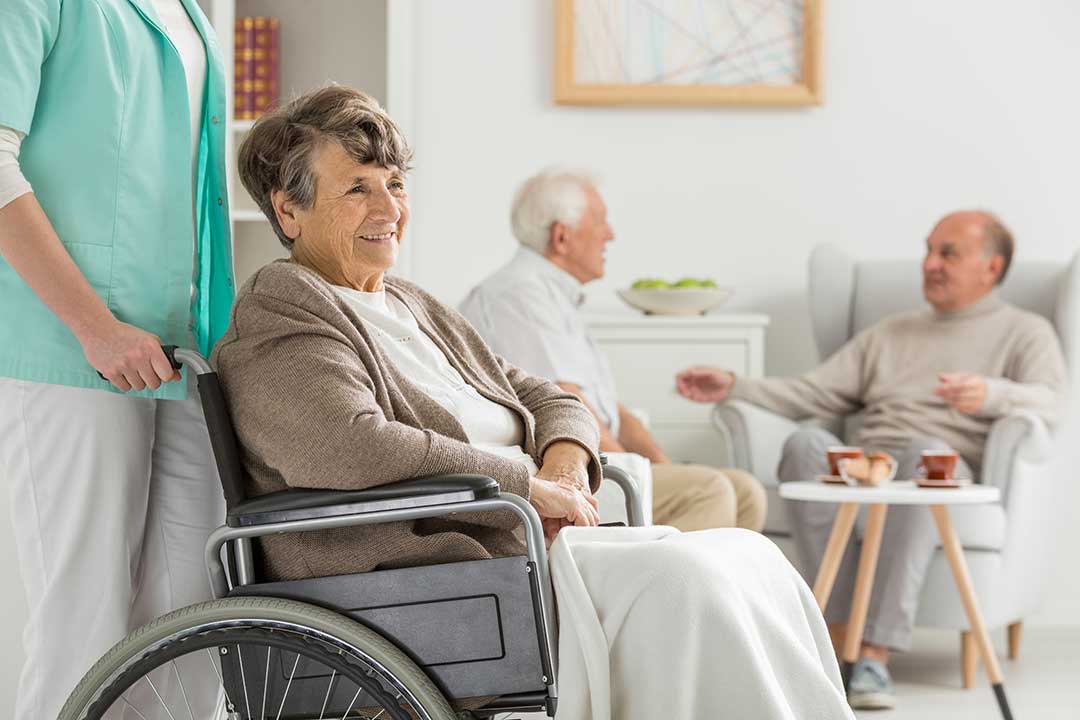
Hearing loss can make group settings tiring or confusing. Helpful adjustments may include quieter seating, good lighting, facing the speaker, reducing background noise, and allowing extra time for responses. Hearing aids and other communication supports should be used according to the person’s needs.
Residents living with memory loss may benefit from familiar routines and activities that focus on enjoyment rather than performance. Music, simple crafts, gentle movement, sensory activities, and conversation about earlier life experiences may be easier than activities requiring complex instructions.
Participation should be based on the resident’s abilities, preferences, and comfort. A person who does not join a group may still enjoy a short visit, a walk through a common area, or a conversation with one familiar person.
How can families encourage healthy social connection?
Families can support connection by learning what the resident actually enjoys rather than assuming that every group activity will be appealing. A lifelong preference for quiet hobbies may be more useful than an invitation to a large event.
Helpful questions include:
- Which activities feel comfortable or enjoyable?
- Are there certain times of day when socializing is easier?
- Does the resident prefer small groups or individual visits?
- Are hearing, vision, mobility, or memory concerns making participation harder?
- Would a familiar family member attend an activity during the first visit?
Short, predictable visits may be easier than occasional long visits. Bringing photographs, music, a favorite card game, or a familiar snack can give the conversation a natural focus.
Families can also watch for changes. A resident who once enjoyed meals or activities but now stays alone may be experiencing pain, depression, fatigue, medication effects, hearing difficulty, or another concern that deserves attention.
What should people look for when evaluating social opportunities?
A community’s activity calendar is only one part of the picture. The quality of social life depends on whether residents can participate comfortably and whether activities reflect different interests and abilities.
Questions worth asking include:
- Are activities offered at different times of day?
- Are there quiet options as well as larger gatherings?
- Can residents suggest or lead activities?
- Are common spaces comfortable, accessible, and easy to find?
- How are new residents introduced to others?
- Are family members included in appropriate events?
- What happens when a resident stops participating?
- Are transportation or weather conditions likely to limit outside visits?
A strong social environment does not need to be busy every hour. It should provide meaningful choices, respectful support, and enough consistency for relationships to develop naturally.
For local households considering a move, the most useful question may be whether the setting offers the type of connection that fits the individual: conversation, shared meals, creative activities, quiet companionship, family time, or a combination of these.
