
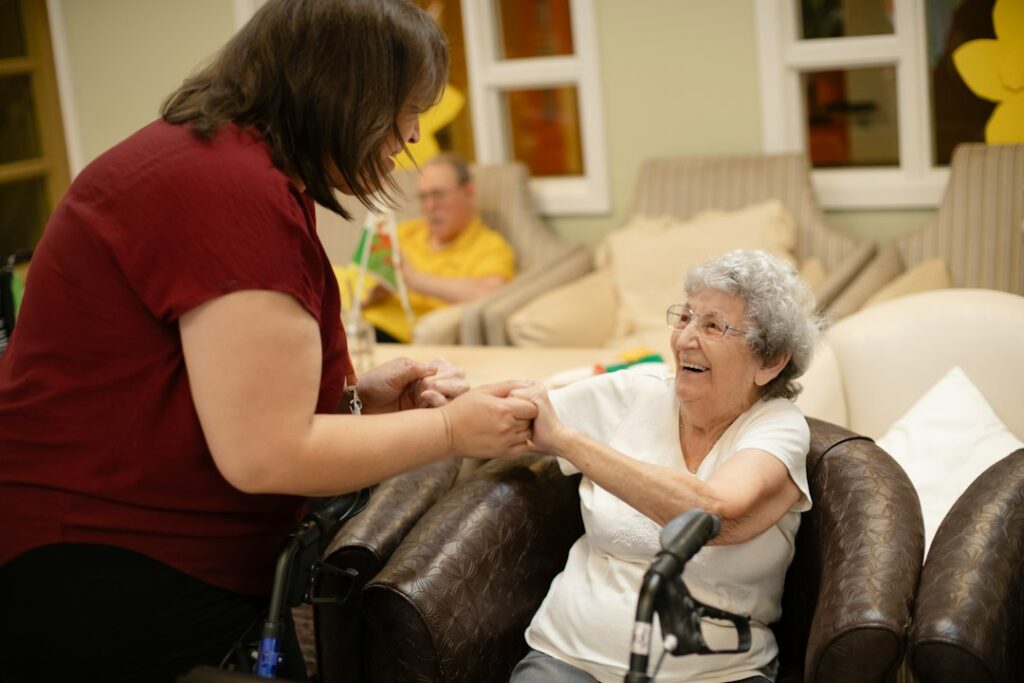
Assisted living staff support residents with daily routines, personal care, health needs, safety, communication, and social connection. The goal is usually not to take over every task, but to provide the right amount of help so a resident can remain as independent and involved as possible.
In Sanatoga, PA, families may be comparing assisted living with remaining at home, moving in with relatives, or receiving care in a nursing facility. Understanding what staff actually do can make those decisions clearer.
What kinds of help do assisted living staff provide?
Staff commonly help with activities of daily living, health-related routines, household tasks, and participation in community life. The level of assistance should be based on an individual assessment and a written support plan.
Daily assistance may include:
- Bathing, grooming, dressing, and oral hygiene
- Toileting and continence care
- Walking, transferring between a bed and chair, and positioning
- Eating and drinking
- Using mobility devices or prosthetics
- Laundry and care of seasonal clothing
- Arranging transportation and medical appointments
- Managing or assisting with medications
- Using the telephone, writing letters, or maintaining personal routines
The type and amount of help can change over time. A resident who only needs reminders at first may later need hands-on assistance with dressing or transferring. Staff should monitor those changes and communicate them through the appropriate care-planning process.
How do staff protect resident independence?
Good assisted living support is not the same as doing everything for a resident. Staff may offer reminders, set up supplies, provide standby assistance, or guide a task while allowing the resident to complete as much as possible.
For example, a staff member might:
- Lay out clothing while the resident chooses what to wear
- Walk beside a resident rather than pushing a wheelchair
- Provide verbal reminders about a daily routine
- Prepare a meal tray while allowing the resident to feed themselves
- Offer choices about activities, bathing times, or meal preferences
- Encourage safe participation in familiar hobbies
This approach helps preserve decision-making, confidence, and physical ability. It also recognizes that personal care is private and should be delivered respectfully.
How do staff help with medications?
Medication support may include reminders, storage, documentation, and administration by qualified staff. In Pennsylvania assisted living residences, medication administration is limited to people who meet the applicable professional or training requirements.
A staff member assisting with medication may need to verify the resident, follow the prescriber’s directions, provide the medication through the approved route, and document what was given. Some unlicensed staff may administer certain medications only after completing the required state-approved training. Additional education is required for unlicensed staff who administer insulin.
Residents and families should ask:
- Who gives medications during each shift?
- How are missed or refused doses documented?
- What happens if a medication order changes?
- How are prescriptions refilled?
- Who communicates with the prescriber or pharmacy?
- Can a resident continue self-administering medication if appropriate?
Medication support is one area where clear procedures and accurate records are especially important.
What role do nurses and other health professionals play?
Assisted living is residential care, not the same as a hospital or nursing facility. However, assisted living residences must have nursing support available according to state requirements, including a nurse on site or on call. The exact services available vary by residence and by the resident’s needs.
Staff may observe changes such as:
- Increased confusion or unusual behavior
- New weakness, dizziness, or falls
- Changes in appetite or fluid intake
- Skin problems or signs of infection
- Difficulty walking or transferring
- Trouble sleeping or participating in normal routines
Direct-care staff are often the people who notice these changes first because they interact with residents throughout the day. They may report concerns to a nurse, administrator, family contact, physician, or emergency service, depending on the situation.

A residence may also coordinate with outside medical providers, therapists, hospice personnel, or other health professionals. These arrangements should be explained clearly in the resident’s care plan and contract.
How do staff support residents with memory loss?
Residents with dementia or other cognitive changes may need structured routines, simple explanations, extra time, and closer observation. Staff support may include gently redirecting a resident, reducing unnecessary confusion, identifying triggers for distress, and maintaining familiar activities.
Helpful practices include:
- Speaking calmly and using short, clear instructions
- Offering one choice at a time
- Allowing extra time for responses
- Keeping important belongings in familiar places
- Watching for wandering, falls, or unsafe situations
- Recording changes in mood, sleep, appetite, or behavior
- Avoiding arguments about mistaken memories
Memory support should still respect the resident’s dignity. A diagnosis does not remove a person’s right to privacy, personal preferences, or participation in decisions.
How do staff help residents stay socially connected?
Staff often organize or facilitate activities, but support can also happen informally. A staff member may introduce a new resident to others, help someone get to a group activity, or encourage participation in a favorite interest.
Activities may include music, games, crafts, exercise, religious or spiritual practices, reading, gardening, outdoor time, or community outings. Individual activities are also important for residents who do not enjoy large groups.
Social support can be especially helpful during the first weeks after a move. A resident may need assistance learning the daily schedule, locating common areas, meeting neighbors, or staying connected with family by phone or video call.
How is safety handled during seasonal conditions?
Weather and building conditions can affect daily routines in this area. During winter, staff may help residents choose suitable clothing, watch for icy walking surfaces, adjust transportation plans, and monitor indoor comfort. During hot and humid weather, they may encourage fluids, observe for signs of heat-related illness, and help residents remain comfortable indoors.
Safety support also includes fall prevention, emergency drills, fire procedures, infection-control practices, and supervision during transfers or bathing when needed. Staff should know each resident’s mobility limits and the correct way to use assistive equipment.
Families can ask how the residence handles power outages, severe weather, transportation interruptions, and emergency communication.
What should residents expect from staff interactions?
Residents should be treated with courtesy, privacy, and respect. Staff should explain care before providing it, protect personal information, and involve the resident in decisions whenever possible.
A resident or family member should be able to ask:
- What does the current support plan include?
- Which tasks can the resident do independently?
- How are concerns communicated between shifts?
- Who should be told about a change in condition?
- How are complaints or disagreements handled?
- What services are included, and which may involve additional charges?
Assisted living staff provide daily support, but residents retain rights and personal choices. Families can learn a great deal by observing how staff speak with residents, respond to requests, handle privacy, and communicate during busy periods.
In a well-organized setting, assistance is consistent without being unnecessarily controlling. Staff help residents manage practical needs while preserving dignity, choice, safety, and connection to everyday life.
